Home /
Table of Contents

Contact Us
Something slightly ironic happened while I was writing this article.
I was sitting at my desk, typing away, probably around the 1000th word or so, when I casually picked up my tumbler and took a sip of water.
Bad idea.
The water was still hot enough to burn my tongue.
My first reaction was honestly a bit confused:
Why is this water still so hot?
I had poured it in quite a while ago.
Of course, the logical answer is that I should have opened the lid and let it cool down first instead of taking a confident, full sip. But that moment made me pause for a second and think about something we usually take for granted.
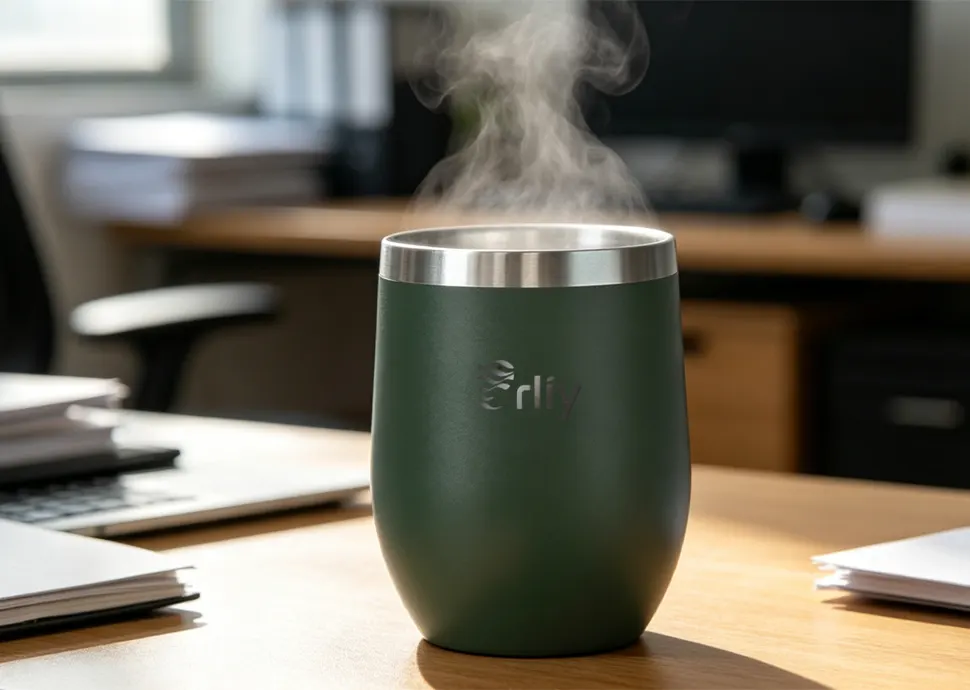
How does a tumbler actually keep drinks hot for so long?
So I decided to run a very small mental experiment.
Imagine three cups sitting on a table. Nothing fancy. Just three everyday containers.
One is a glass cup.
One is a simple single-wall metal cup.
And the last one is a double-wall vacuum insulated tumbler.
Now pour the same hot water into all three and leave them there for a while.
If you’ve ever done something like this at home, you probably already know what happens. The water in the glass cup cools down fairly quickly. The metal cup cools even faster, and the outside becomes hot to the touch almost immediately. Meanwhile the vacuum tumbler just sits there quietly doing its job, holding onto that heat much longer than the others.
So what’s actually going on?
To understand that, we have to look at how heat normally escapes.
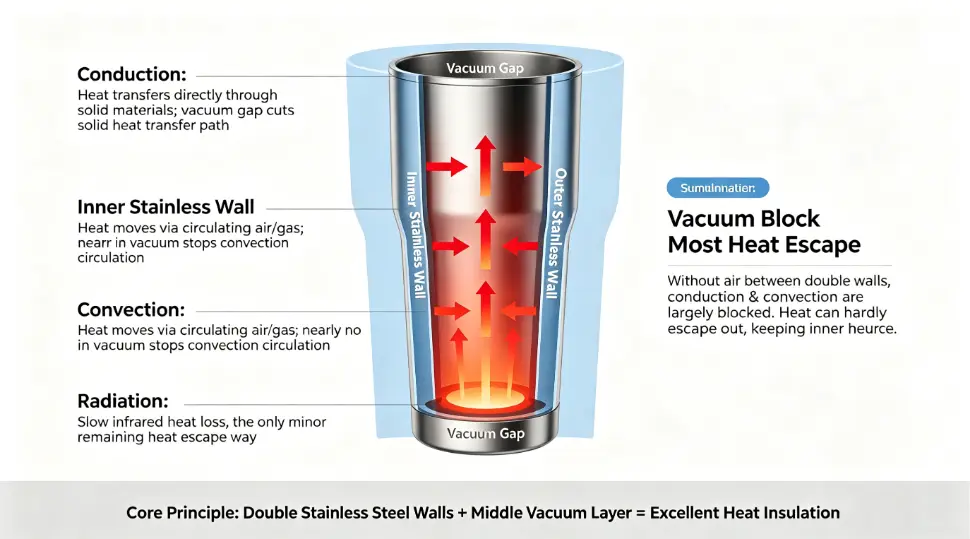
Heat usually moves in three main ways: conduction, convection, and radiation. It sounds a bit like a physics class, but the ideas themselves are pretty simple once you picture them in everyday objects.
Take conduction first. This is when heat travels directly through solid materials. If you pour boiling water into a single-layer metal cup, the heat quickly moves from the water to the metal wall, and from the metal wall to the outside air. That’s why the cup becomes hot to touch so quickly. The heat is literally traveling through the material.
Then there’s convection. This one involves liquids and gases. When hot water meets cooler air, the warm air rises and cooler air moves in to replace it. That circulation slowly carries heat away from the drink. In a regular cup, this process happens constantly around the surface.
And finally there’s radiation. Even without touching anything, warm objects naturally release energy in the form of infrared radiation. It’s a slower process, but it’s always happening.
Now here’s where the double-wall vacuum structure starts to make sense.
If you could slice a vacuum tumbler in half and look inside, you’d see two stainless steel walls with a very thin space between them. That space isn’t filled with air. Instead, most of the air has been removed, creating something close to a vacuum.
And that tiny detail makes a big difference.
Without air or other material in between the walls, conduction becomes much harder, because there’s very little substance for heat to travel through. At the same time, convection almost disappears, since convection needs moving air or liquid to carry heat away. With almost nothing there, the process simply can’t happen the same way.
The result is that heat has far fewer paths to escape.
The double-wall design also means the outer surface stays relatively stable in temperature. That’s why a well-made vacuum tumbler doesn’t usually feel extremely hot on the outside even when the drink inside is very hot.
Of course, the same principle works the other way too. If you fill the tumbler with something cold, the vacuum layer slows down heat from the outside trying to move inward, which helps keep drinks cold for longer.
On paper the concept sounds surprisingly simple. Two walls, a vacuum in the middle, and suddenly your drink stays hot for hours.
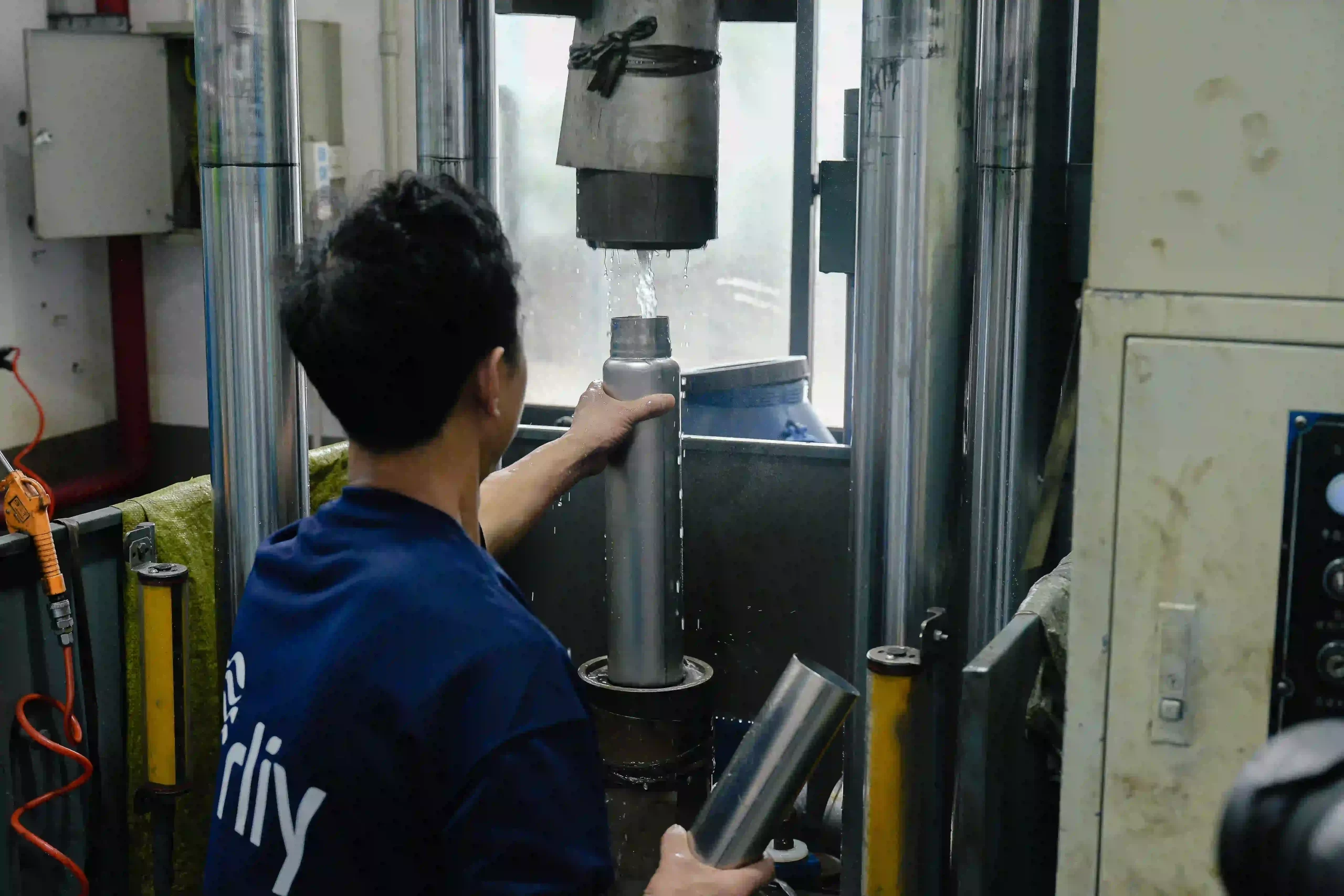
In reality, making a tumbler that performs well isn’t quite that effortless. The vacuum seal has to be reliable, the stainless steel needs to be properly formed, and the manufacturing process has to be precise enough to maintain that vacuum layer over time. Small details in production can make a noticeable difference in insulation performance.
Most of us use insulated tumblers every day without really thinking about what’s happening inside the metal walls. But once you start looking into it, the physics behind something as ordinary as a water bottle becomes surprisingly interesting.
As a tumbler manufacturer based in China, we enjoy sharing little pieces of that knowledge from time to time. Not just the products themselves, but the ideas and engineering behind them.
And if there are other questions about drinkware or insulation technology that you’ve always been curious about, feel free to reach out.
There’s a good chance the next article might start the same way this one did — with me taking a sip of water that turned out to be much hotter than expected.

Written by
Prliy
Prliy is a manufacturer focused on stainless steel drinkware, specializing in both core components and finished products. We are committed to creating bottles that perform reliably in everyday life — with a strong focus on insulation, food safety, and long-term durability.
Our products are developed and manufactured under strict, standardized, and sustainable processes, meeting multiple international food safety and environmental standards.
With years of industry experience, Prliy operates two stable production facilities in Zhejiang, China, along with an overseas warehouse in the United States. This integrated system — covering manufacturing, warehousing, and delivery — allows us to respond efficiently to customer needs while ensuring stable, long-term supply capabilities.
-
Share
-

-

-